
Difference Between a White-Collar Criminal and a Criminal
Read this 500 word essay to learn more.
George Tannous, PhD
4/1/20262 min read
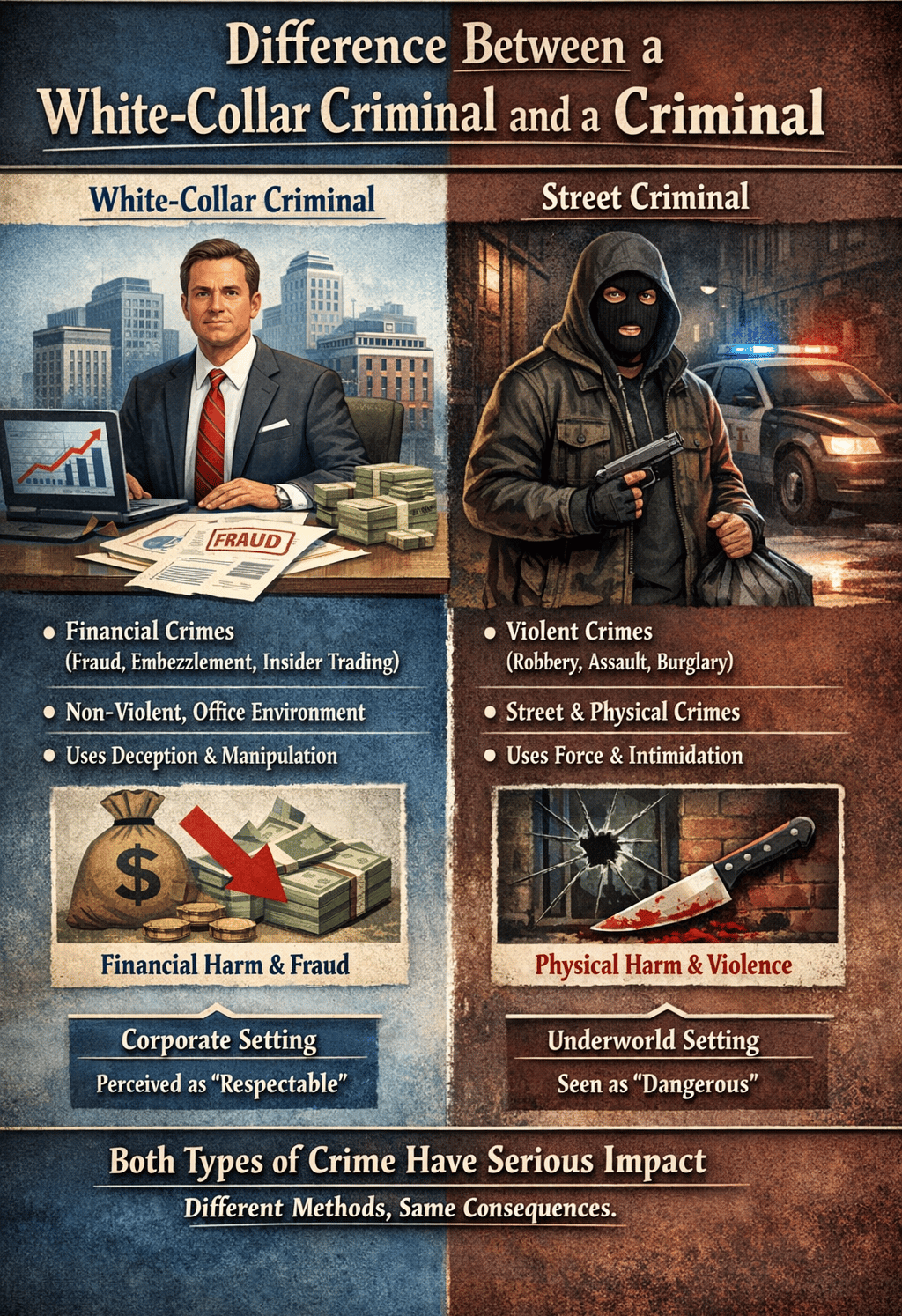

Difference Between a White-Collar Criminal and a Criminal
Crime is often associated with violence, danger, and physical harm, but not all crimes fit this stereotype. The distinction between a white-collar criminal and what people typically think of as a “criminal” lies primarily in the nature of the offense, the methods used, and the social perception of the individuals involved. Understanding this difference helps reveal how crime exists across all levels of society, not just in obvious or visible forms.
A white-collar criminal is someone who commits non-violent, financially motivated crimes, usually in a professional or business setting. These crimes often include fraud, embezzlement, insider trading, identity theft, and money laundering. The term “white-collar” reflects the type of work environment associated with these individuals—offices, corporations, or government institutions—where employees typically wear business attire. White-collar criminals often use deception, manipulation, or abuse of trust rather than physical force to achieve their goals. For example, a corporate executive who falsifies financial statements to mislead investors is engaging in white-collar crime.
In contrast, the term “criminal” in everyday usage usually refers to individuals who commit more traditional or “street” crimes. These offenses often involve direct harm or threat of harm to others and include crimes such as robbery, assault, burglary, and homicide. These crimes are typically more visible and immediate, often involving physical confrontation or violence. Because of this, they tend to receive more media attention and are more strongly associated with danger in the public imagination.
One of the key differences between white-collar criminals and traditional criminals is the method used. White-collar crimes rely on intellect, planning, and access to systems or information, while traditional crimes often involve physical action or force. Additionally, white-collar criminals often operate within legal organizations, using their positions to commit illegal acts, whereas traditional criminals may operate outside formal institutions.
Another important difference lies in societal perception and consequences. White-collar criminals are often viewed as more respectable because they tend to be educated, employed, and sometimes even wealthy. As a result, their crimes may be underestimated or perceived as less harmful, even though they can affect large numbers of people and result in massive financial losses. In contrast, traditional criminals are often stigmatized more harshly and are more likely to face immediate and severe legal consequences.
However, it is important to recognize that both types of crime can have serious impacts. While street crimes may cause physical harm or fear, white-collar crimes can ruin lives financially, destroy businesses, and undermine trust in institutions. For example, a large-scale fraud scheme can wipe out people’s life savings, which can be just as devastating as physical loss.
In conclusion, the difference between a white-collar criminal and a traditional criminal lies mainly in the nature of their crimes, the methods they use, and how society perceives them. While one operates through deception in professional settings and the other through more direct and often violent means, both are forms of criminal behavior that can have significant consequences. Understanding these differences highlights the complexity of crime and the importance of addressing all forms of illegal activity equally.
Help
Support for your journey beyond incarceration
Contact
Connect
george@gtannous.org
1-818-512-8125
© 2026. All rights reserved.